Buoy 10 Salmon Fishing Regulations 2026
I’m Captain Larry Kesch, and I’ve been fishing in Oregon waterways for the majority of my life. This guide will assist you in making plans if you are considering Buoy 10 salmon fishing in 2026. I’ll go over when the season typically starts, what you can see, and why you should make reservations in advance. I am the owner of Hook’em Up Guide Service, which is another name for Portland Fishing Trips. We’re a father-son guide service. Colby, my son, leads beside me today, having grown up fishing with me. Every year, when the season permits, we do one of our favorite late-summer salmon trips at Buoy 10, which is located near Astoria at the mouth of the Columbia River.
When does Buoy 10 open in 2026 and what are the rules?
The dates for the opening of Buoy 10 (salmon season) are not guaranteed for 2026, nor are the limits or retention rules for salmon. These rules are established and modified annually in Oregon and Washington and may be changed either prior to or during the season as the runs develop.
Buoy 10 is a popular fall salmon fishery at the mouth of the Columbia River. It affects fall Chinook (also known as King salmon) and Coho salmon. The Columbia is a shared border water, therefore ODFW and WDFW manage the water. They determine dates, catchability and daily limits per season. Please check the current rules for 2026 Buoy 10 with ODFW and WDFW before fishing or booking.
Captain Larry’s quick take
Here’s how I’d put it. Buoy 10 is one of the top salmon shows in Oregon, but it’s a brief, hectic period and the rules change each year. My job is to know the current season dates and retention rules so you don’t have to hunt through the rules. I’m following the run updates when they are published. All you have to do is show up and fish, I’ll take care of the rest!
When does Buoy 10 open in 2026?
The main action is usually in August and September with Buoy 10 opening around August 1st. The open and close dates (and any in-season changes) are established annually by ODFW and WDFW and should be verified prior to planning around them.
Season may be varied depending on the number of runs. Some years the Chinook and Coho rules change partway through, which is normal for this fishery. One thing I always tell people is to book your date first and treat the exact rules as something we confirm closer to the trip. This way you can get a good day on the water while the details are ironed out.
What can you catch at Buoy 10?
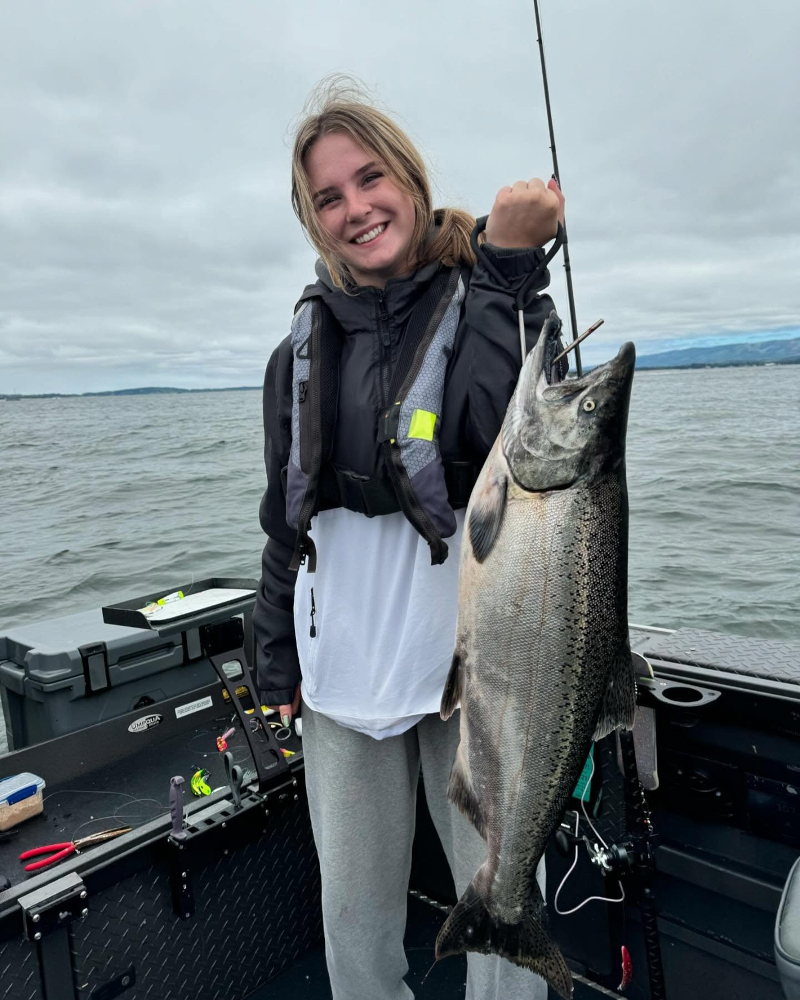
Fall Chinook (King) salmon and Coho salmon can be caught at Buoy 10. Chinook are larger, harder to pull and Coho are scrappy, fast and a lot of fun, and will often be present in good numbers later in the run.
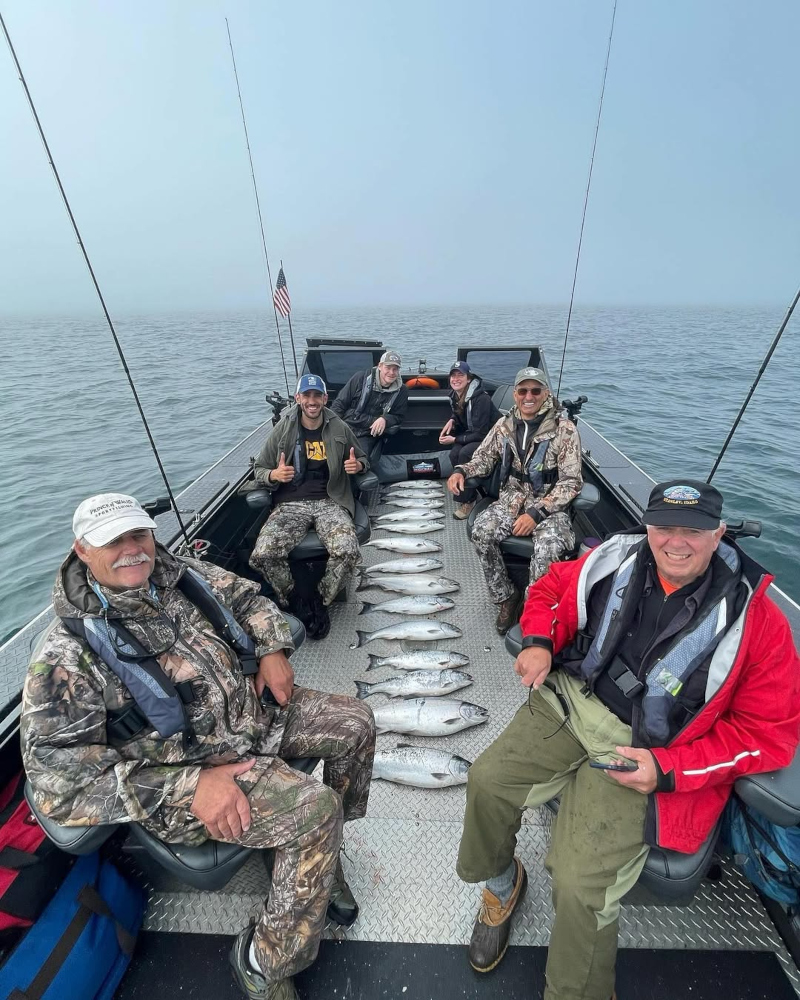
The two fish are different and so too can be the rules. Some years, you may be able to retain a Chinook, some years, only a Coho, and sometimes the rules of the hatchery fin clips apply. Which is why we always check the current ODFW and WDFW retention rules before we go out. When fishing the lower Columbia I match my gear and depth to the fish and the rules that are available on the day. Buoy 10 is famous for serving up a lot of salmon when the time is right.
Why is Buoy 10 so popular, and why should you book early?
Buoy 10 is popular because a lot of salmon are concentrated into a short window at the mouth of the Columbia in the late summer. This is what makes it so important to book early, given that it’s such a short season, and also the crowds it attracts. The good dates go quickly.
The Columbia River mouth is a large, active river. The tides are strong and the current is strong, and the fishing varies with it. As a rule, I always keep an eye on the tide, the current and the bite to get us to the right place at the right time. There are lots of boats in during the height of the season and it helps to have a guide who can keep up with the tide and avoid the hassle. My son Colby and I spend a lot of time out here and we schedule our day around the best tide windows.
Why book with Captain Larry and Portland Fishing Trips?
You are booking local experience right here on the lower Columbia. I’ve been fishing in Oregon for decades, I’m a full-time guide and I know how to fish at Buoy 10 all season long. It’s an experience that helps me read the tides, locate the fish and keep you on the bite.
You also receive a real father-son guide service! Colby grew up fishing with me and now guides with me, so you’re getting personal, hands-on attention. We keep up to date with the rules of ODFW and WDFW, and the run updates, so your day is legal and ethical from start to finish. Two boats are able to cover more water and can adjust quickly when the salmon move.
Frequently Asked Questions
When does Buoy 10 open in 2026? Buoy 10 traditionally opens around the start of August, but the exact 2026 dates are set each year by ODFW and WDFW and can change. Confirm the current dates with both agencies before you plan around them.
What are the Buoy 10 salmon regulations for 2026? Buoy 10 targets fall Chinook and Coho salmon, and the retention rules and limits are set annually by ODFW and WDFW and can change mid-season. Always check the current 2026 rules before you fish or book.
What salmon can you catch at Buoy 10? Fall Chinook (King) salmon and Coho salmon. Chinook are the larger fish, and Coho are fast and fun, often arriving in strong numbers later in the run.
Do I need experience to fish Buoy 10? No. New anglers and families are welcome. We provide the gear and coach you through everything on the boat.
Do I need a fishing license for Buoy 10? Usually yes. Most adult anglers need a valid fishing license, and salmon trips often require specific tags or endorsements. Confirm the current requirements with ODFW before your trip.
Should I book early for Buoy 10? Yes. Buoy 10 is a short, very popular season, and the best dates fill up quickly, so booking early is the safest way to get the day you want.
Ready to book your 2026 Buoy 10 salmon trip?
I’d love to get you out for Buoy 10 salmon fishing in 2026. This is a short, busy season, and good dates go fast, so the best move is to reach out early and lock in your day. Colby and I will handle the rules, the gear, the boat, and the tides, so you can focus on the salmon. Book your Buoy 10 trip with Portland Fishing Trips, and let’s go put some salmon in the boat near Astoria.