Best Time of Year for Salmon Fishing in Oregon
Oregon is more than a hunting ground in salmon. It entails intricate migrations, concerted agencies as well as a giant regional economy. It is important that ananglers should be aware that the legal season varies yearly. The Oregon Department of Fish and Wildlife (ODFW) and the Pacific Fishery Management Council (PFMC) have their windows on each species. These windows are identified by North of Falcon which completes in April.
The 2025 2026 cycle begins on May 16. The present situation is characterized by the obvious polarization of the species: Chinook salmon are becoming smaller and have been capped on harvest, whereas the Oregon Coast Natural (OCN) Coho is also recovering well. The 289,000 OCN Coho in 2025 is projected by the managers as the highest it has been since 2012.
Understanding the Peak Windows for Oregon Salmon Anglers
Peak abundance and past success will have to be looked into to determine the most appropriate time to fish. Fishery health is dependent on such data as self-reported catch records and the abundance prediction. According to most experts, late summer and early autumn is the time of the most fish. These windows too are economical.
The business community earns more than $640 million and provides 9200 employees. Societies like Clatsop and Tillamook are reliant on such runs as a source of seasonal labor and infrastructure. The fishing activity is highest during the month of May and sustains 1,523 employment opportunities whereas in November, the fishing activity is reduced to approximately 414.
The Significance of the August and September Estuary Run
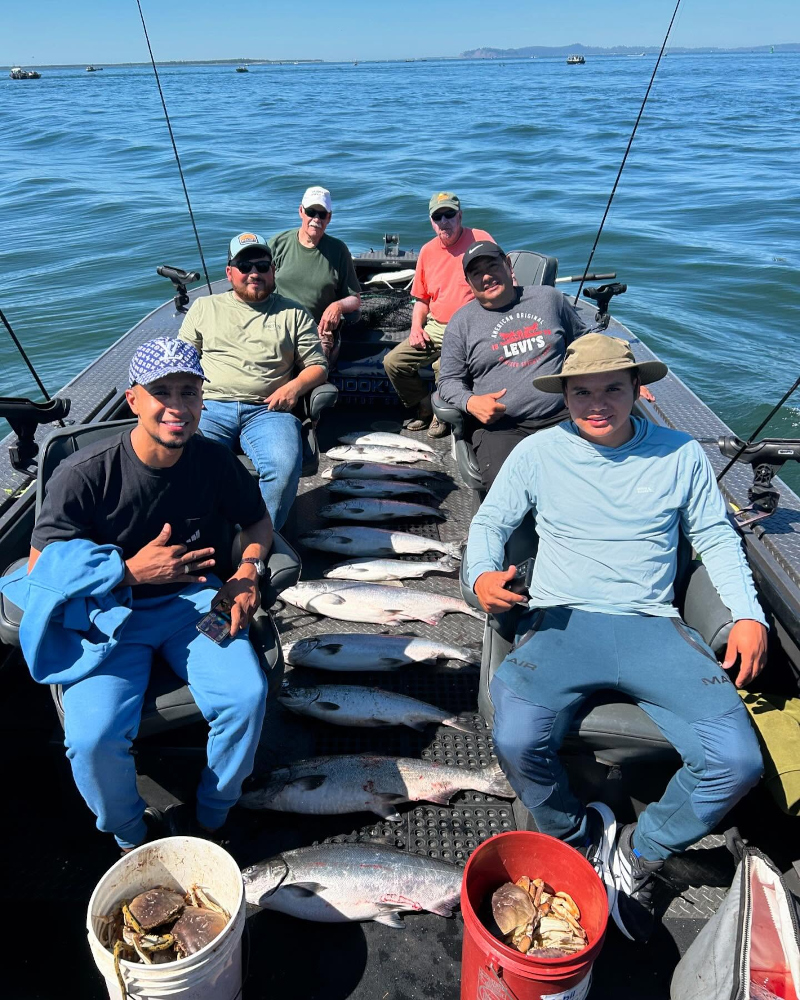
The fishermen target salmon who migrate between the sea and the fresh water at the end of summer. August and September are found to be the best months in terms of volume. Salmon at this time are still ocean-bright in color, are firm-fleshed and rich in oil. The Columbia River mouth Buoy 10 location has been the most productive recreational location in the state. Buoy 10 produced 13,469 Chinook in 2024, with over 12,000 being caught in August alone- a minor improvement to 2023. There was also a major Coho focus on Newport, which registered one hundred and sixty-eight thousand fish during a late period in 2024.
Targeting Spring Chinook on the Columbia and Willamette Rivers
Although Fall runs are volume, a lot of experienced fishermen fish Spring Chinook to get quality. These fish come in between February and June and have high fat and taste. The Lower Willamette and Columbia Rivers peak in the months of April and May.
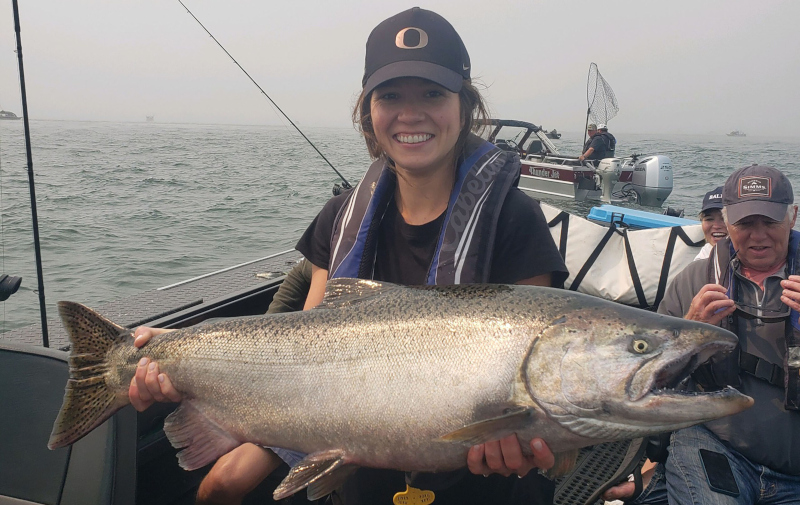
The lower Willamette had 7,246 harvests in 2024, with the highest concentration of the catch in April. Small snowpacks and droughts make rivers warmer and shallower, relying on cool and snow-fed rivers. Anglers have to be able to follow real-time flow and temperature. Winning in spring takes a tactical move not a calendar date.
Exploring Shoulder Seasons and Inland River Opportunities
There are some seasoned fishermen who do not fish in crowded estuaries. They like shoulder seasons or inland rivers, where it is more about being accurate and patient than it is a big coastal adventure. The July Summer Chinook run in the Columbia is an example of fish with less competition that is of trophy sizes. When they gain access to Tillamook Bay, the beasts are commonly referred to by the name June Hogs by the anglers.
Specific opportunities are also offered in late fall. Coho fishers get attracted to rivers such as the Kilchis and Nestucca between October and December. Drift-boat fishing in these remote points is a change of difficulty. The best time to go fishing by these contrarian fishers is the quality of the experience rather than the quantity. They appreciate the closeness of the river to numbers.
Debunking Common Myths and Misconceptions on the Water
The myths are usually caused by intricate fishery regulations. Most of the fishers rely on size or colour to determine the species, but these are not accurate. The largest of them are normally the chinook and Coho can go up to a 30-pound range. Every salmon in the ocean is silver.
Anglers fear that loud voices are frightening fish, however, salmon do not hear what is in the air. They detect vibrations along the hull, and as such, dropping a weight or banging down a hatch signifies the presence of fish in the nearby waters.
Are you ready to have the most fruitful runs along the Oregon coast? Book your next adventure with HOOK’EM UP Guide Service to find the hottest bites and master the tides. Our team of professionals offers local expertise and quality equipment to spend a successful day on the water. Contact HOOK’EM UP Guide Service today to secure your spot for the upcoming peak season.